Creel tells you what's open right now in your region — bag limits, size limits, closures, MPA lines and health advisories. Checked against CDFW and CDPH every single day, and cached on your phone so it still answers 30 miles offshore with no signal.
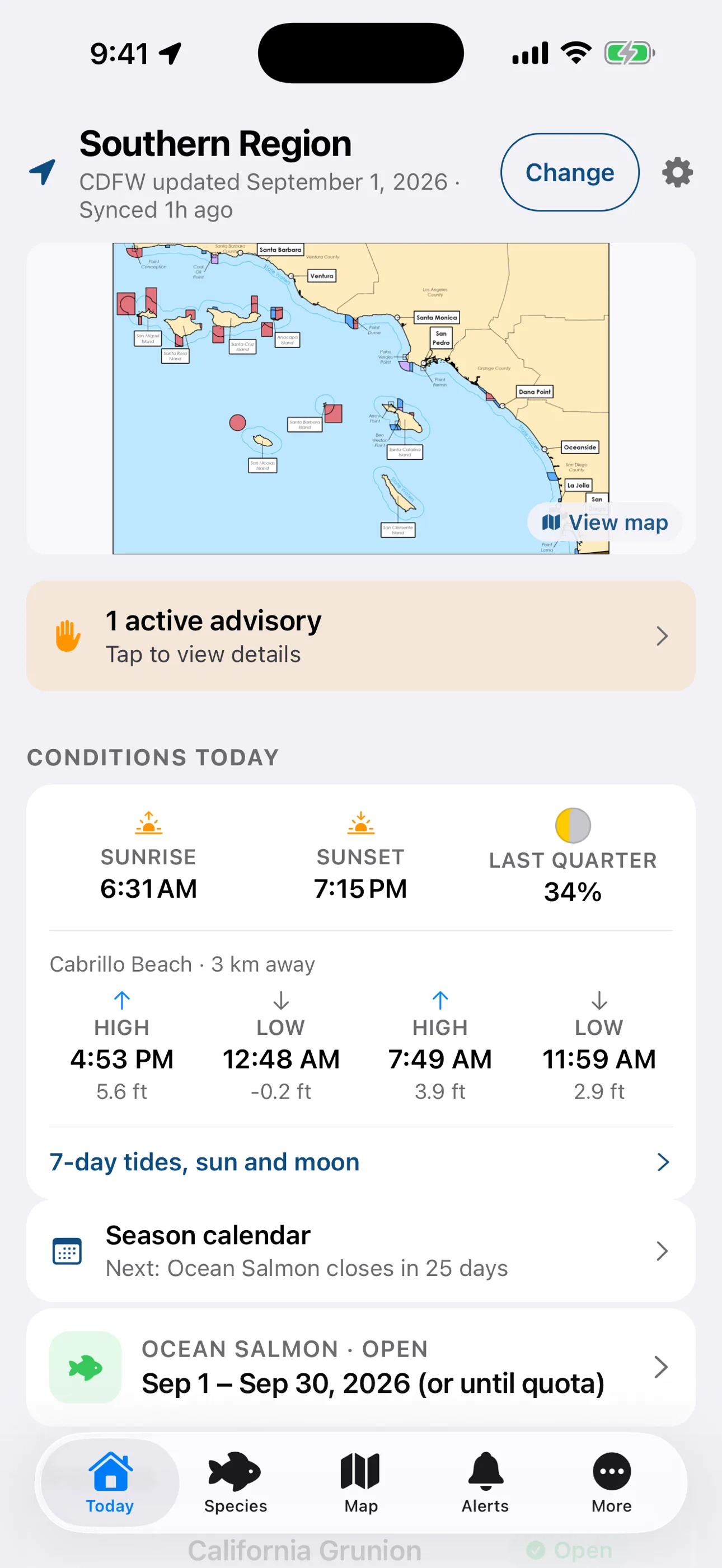
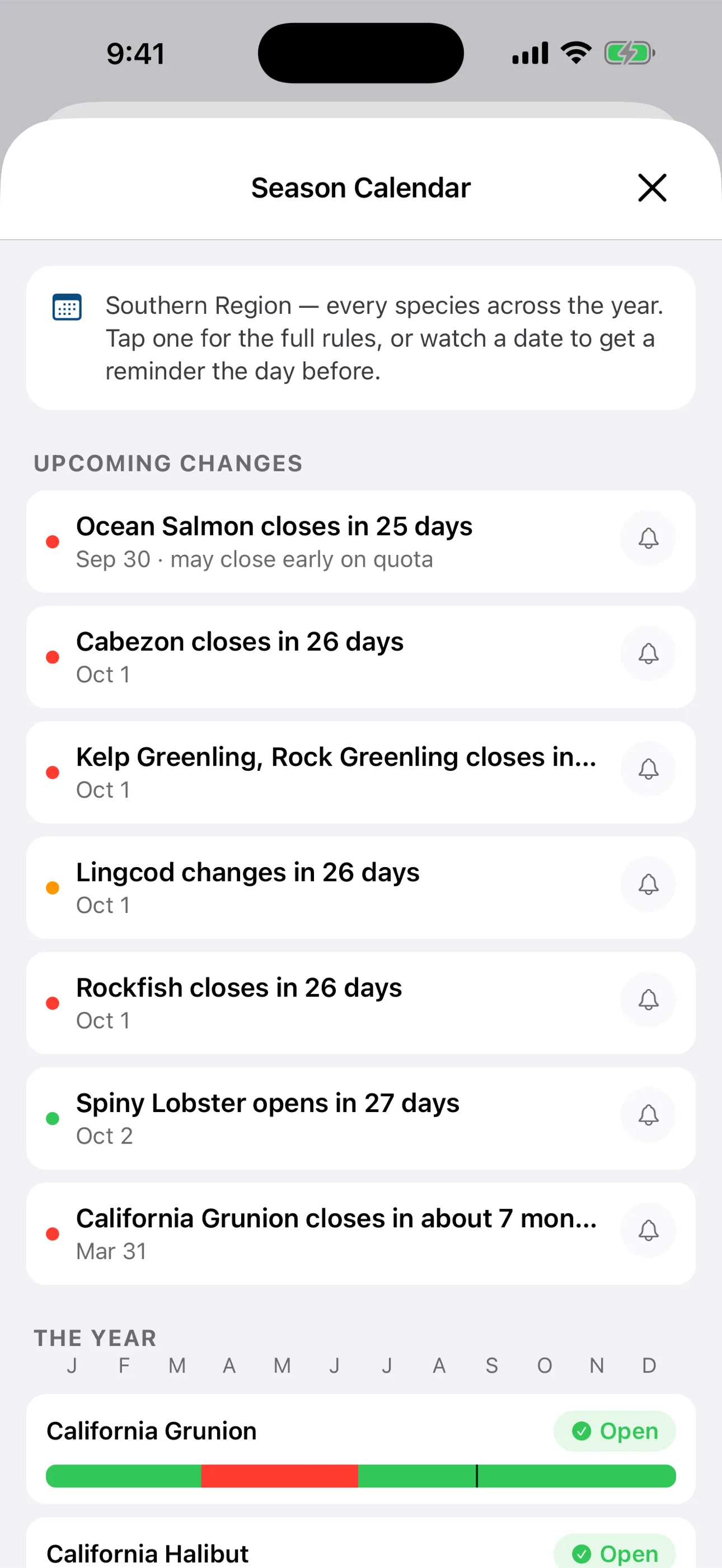
Every one of these is a date somebody will get a citation for missing. Creel watches them for your region and pushes a reminder the morning before.
Lingcod moves to 50-fathom offshore only on the same day. The four northern management areas stay open all depths through December 31.
Read the guide →The biggest opener of the California fall. Seven per person, 3¼-inch carapace measured in the water, report card in hand before the first hoop goes over.
Read the guide →Central and Southern already closed September 30. Any of these can close early on quota with days of notice.
Read the guide →First Saturday in November, statewide — unless domoic acid or whale entanglement risk delays your zone, which has happened in six of the last eight seasons.
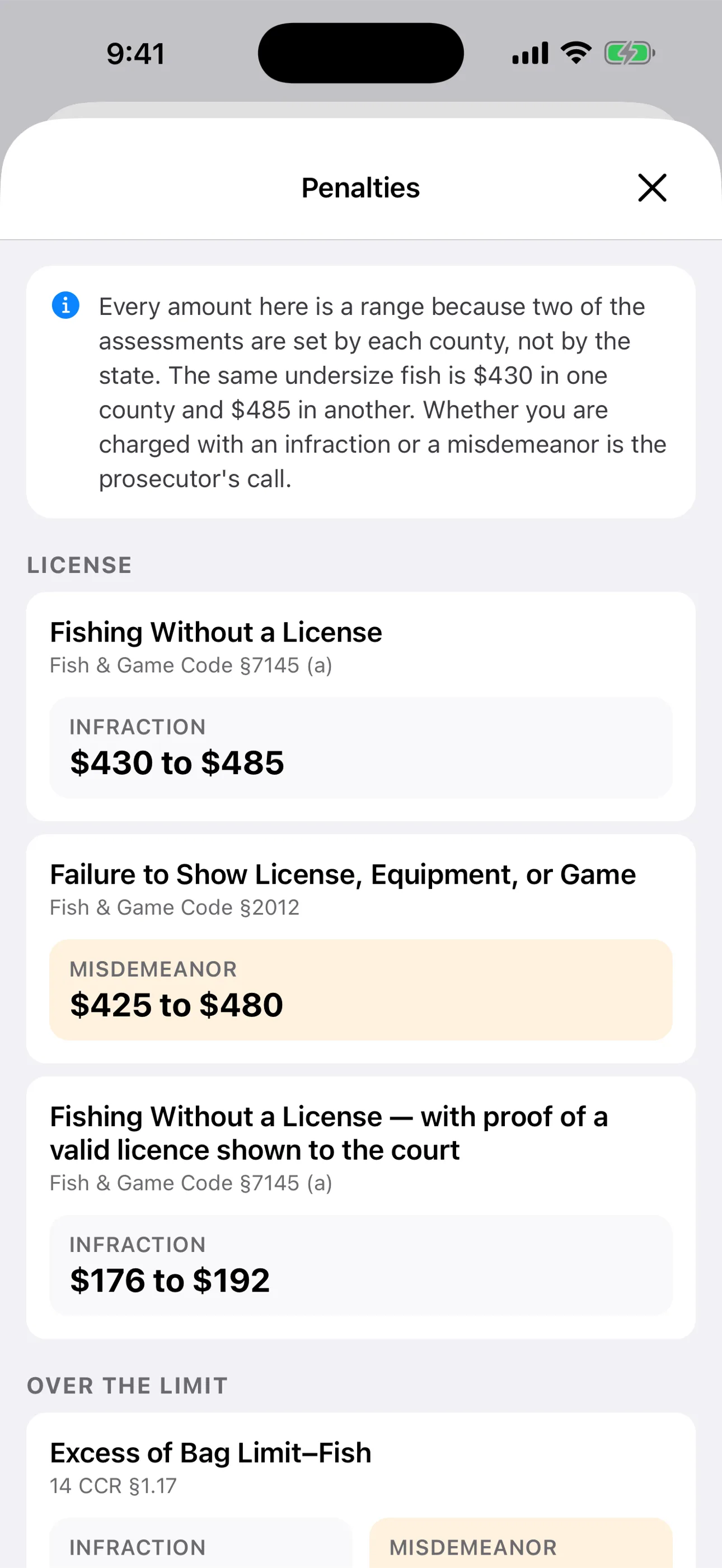
Read the guide →Fishing without a license is about $430 to $485 in total bail. One undersize lobster is the same again. Creel keeps you legal for pennies a day.
iPhone and Android · No account required — your subscription ties to your store account
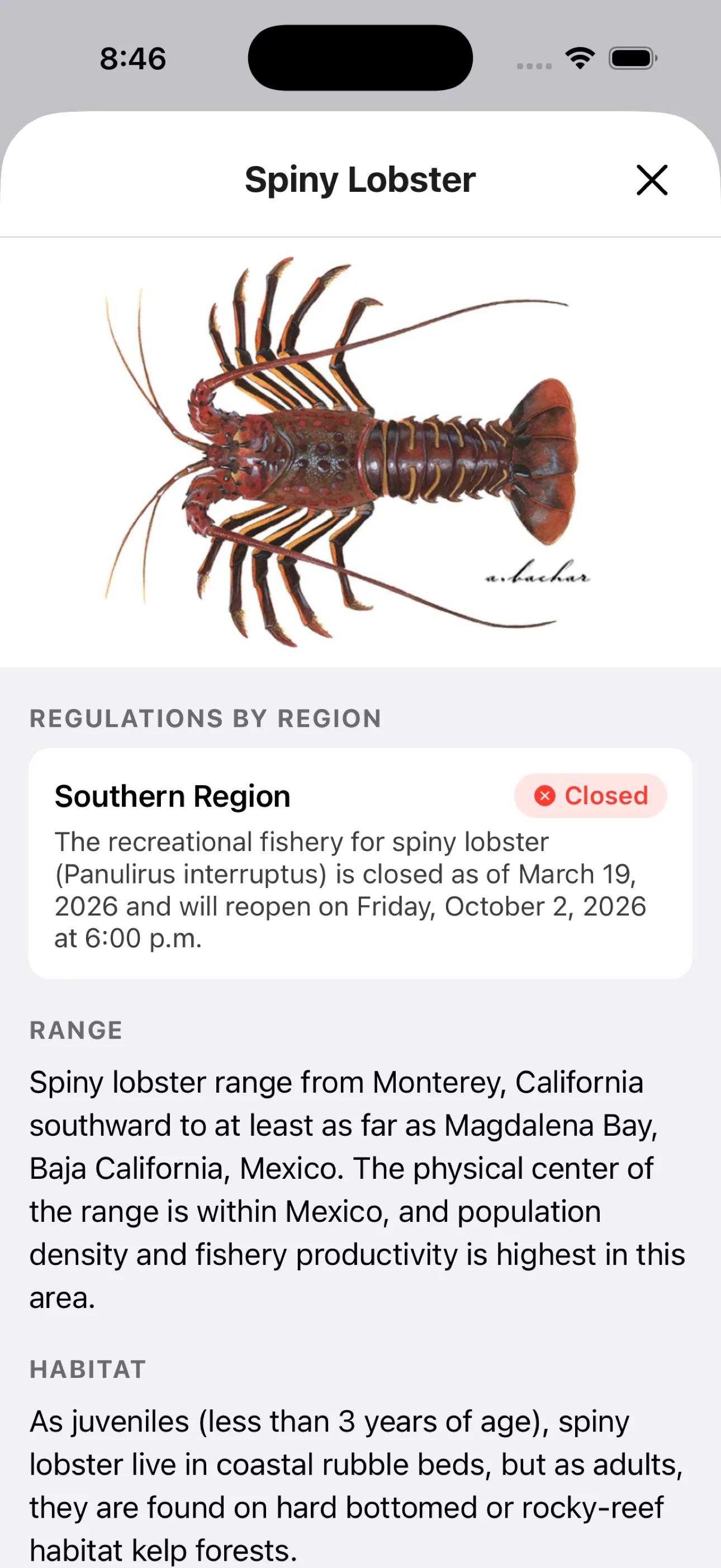
CDFW answers the first one. Creel answers all four, in one place, offline.
159 live regulations across 39 species and 6 CDFW management regions — season, bag limit, size limit, gear and depth. Plus 57 statewide sections of Title 14, the in-season change feed, ocean salmon by management area, and 23 licence and validation fees.
120 offences from the Judicial Council bail schedule, infraction and misdemeanor side by side, with the per-animal surcharge for going over the limit — and the two statutes that bring the number back down. No other California fishing app has this.
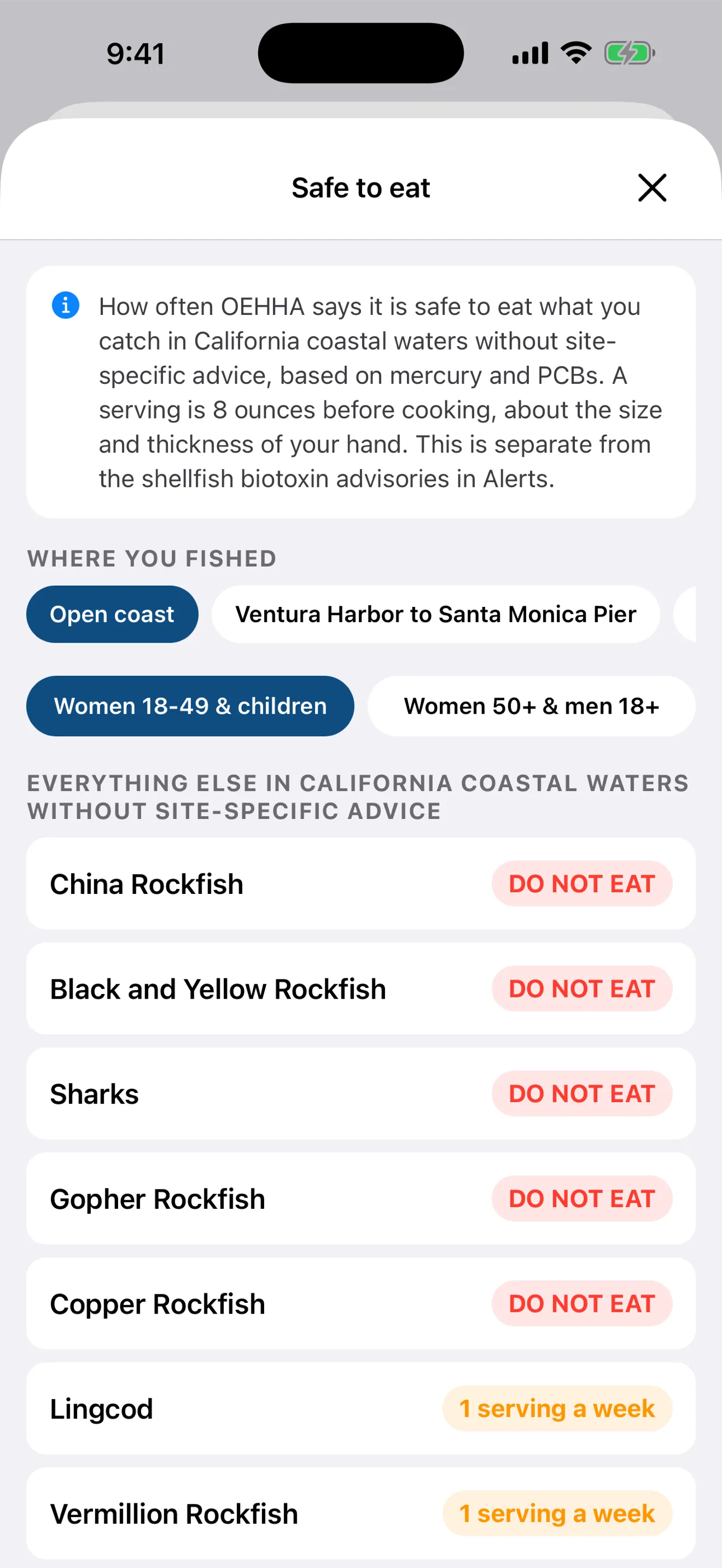
322 OEHHA guidelines across 11 coastal and bay zones and 64 species, with separate advice for women 18–49 and children. CDFW lets you keep five lingcod; OEHHA says eat one a week. Both belong on the same screen.
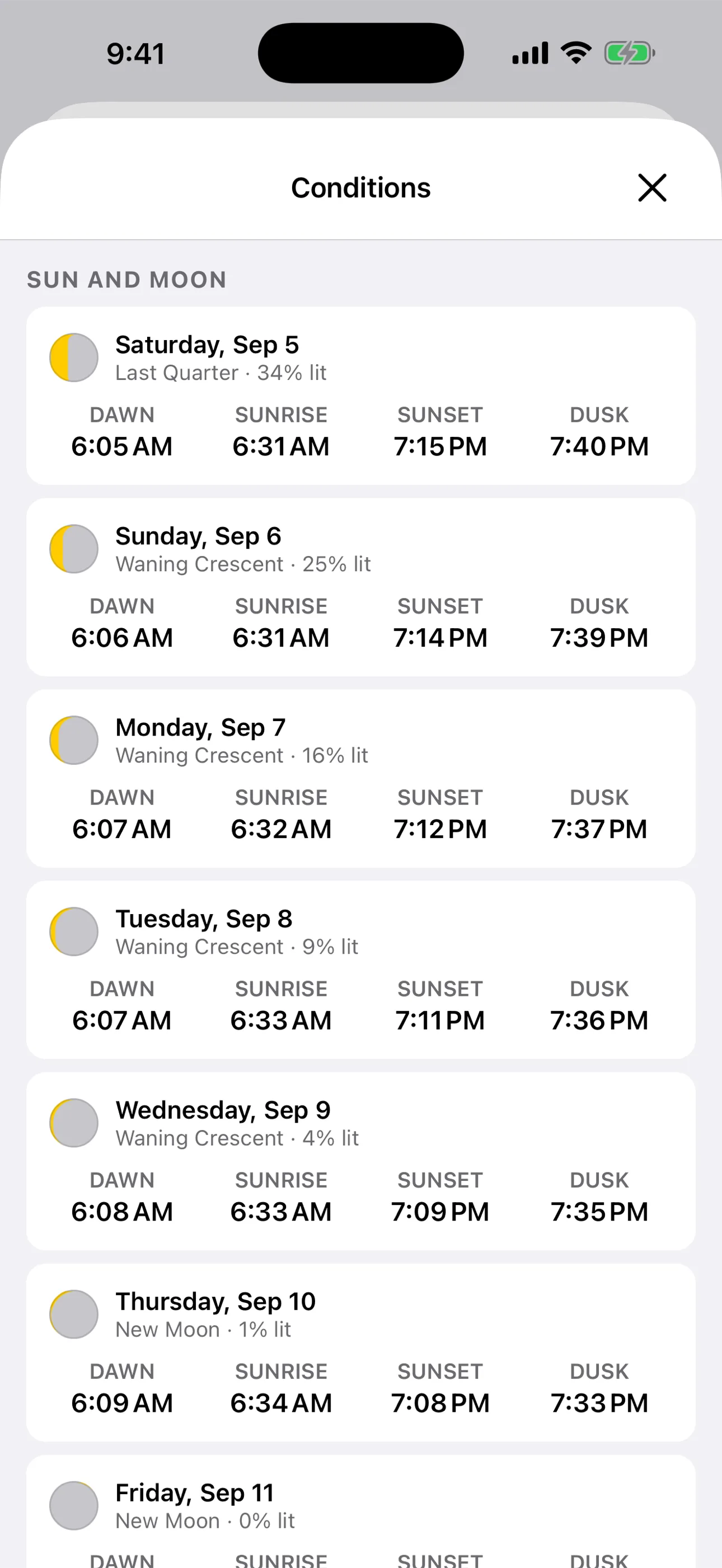
Seven days of tide predictions from the nearest of 193 NOAA stations, plus dawn, sunrise, sunset, dusk and moon phase computed on device — so they still work with no signal. Grunion run nights with the moon and dusk for each.
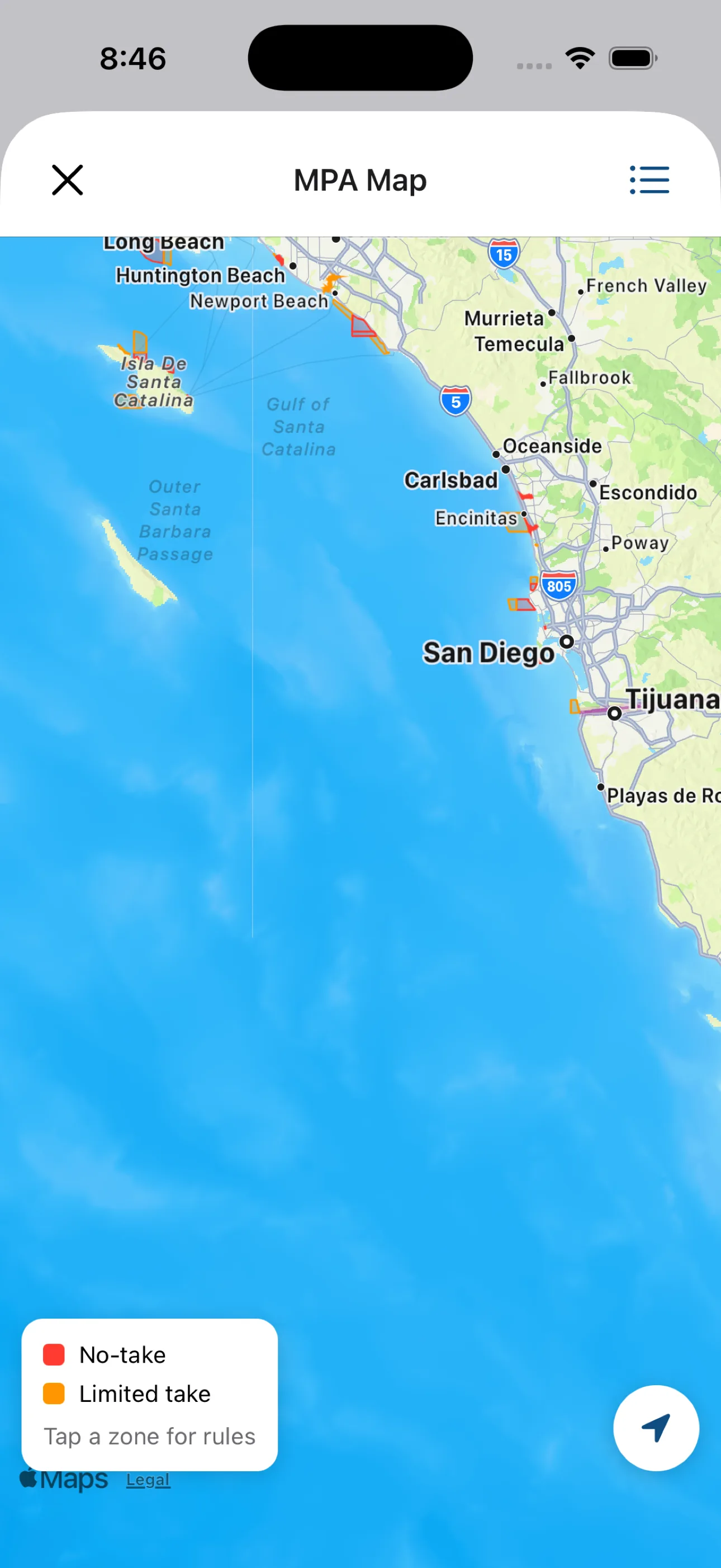
All 157 California Marine Protected Areas and special closures with their real boundaries, your position against the no-take lines, and what each one actually allows.
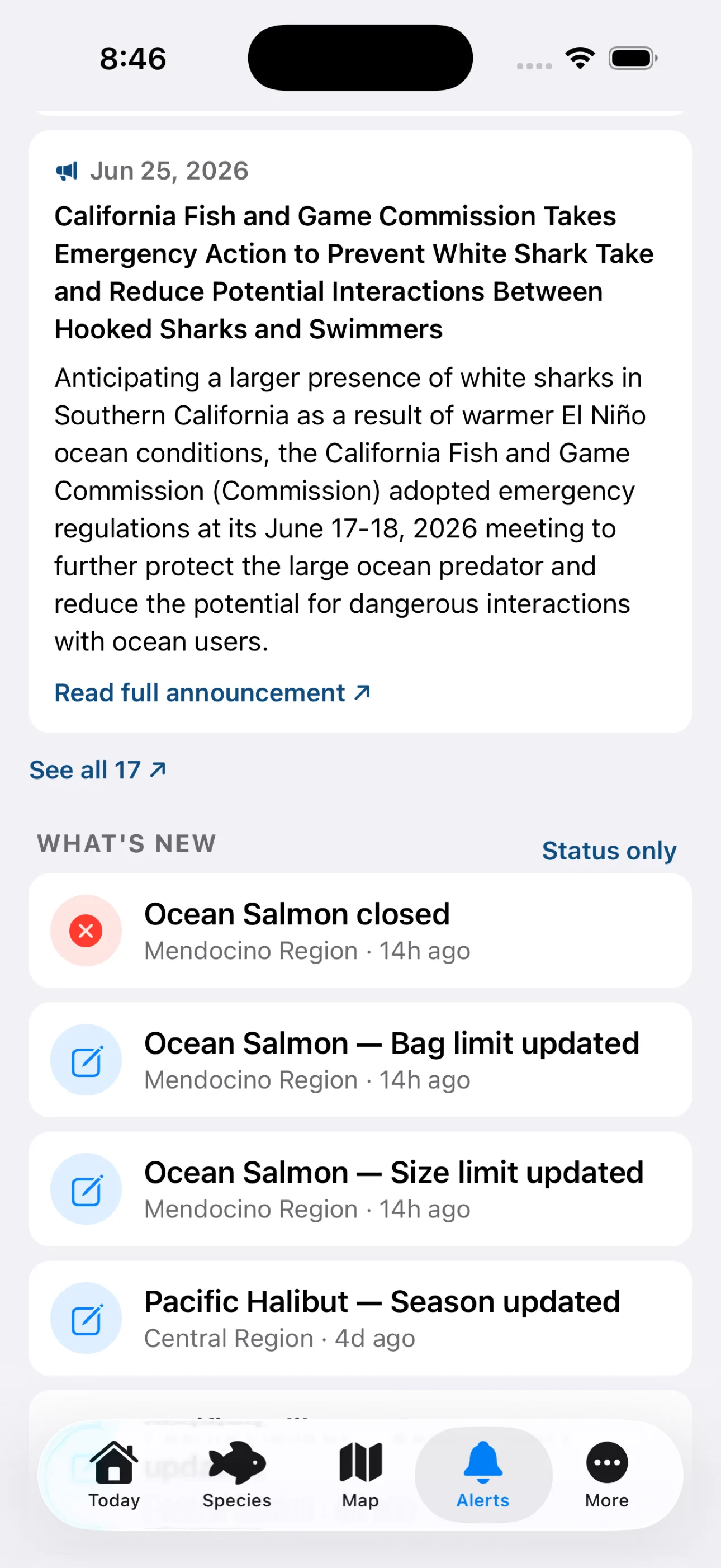
Watch a species and get a push the morning before its season flips in your region. Emergency closures and new CDPH shellfish advisories arrive the same way — the whole reason a printed booklet stops being true in July.
California's ocean regulations differ across 6 management regions. Choose yours once — or let Creel find it from your location — and it remembers.
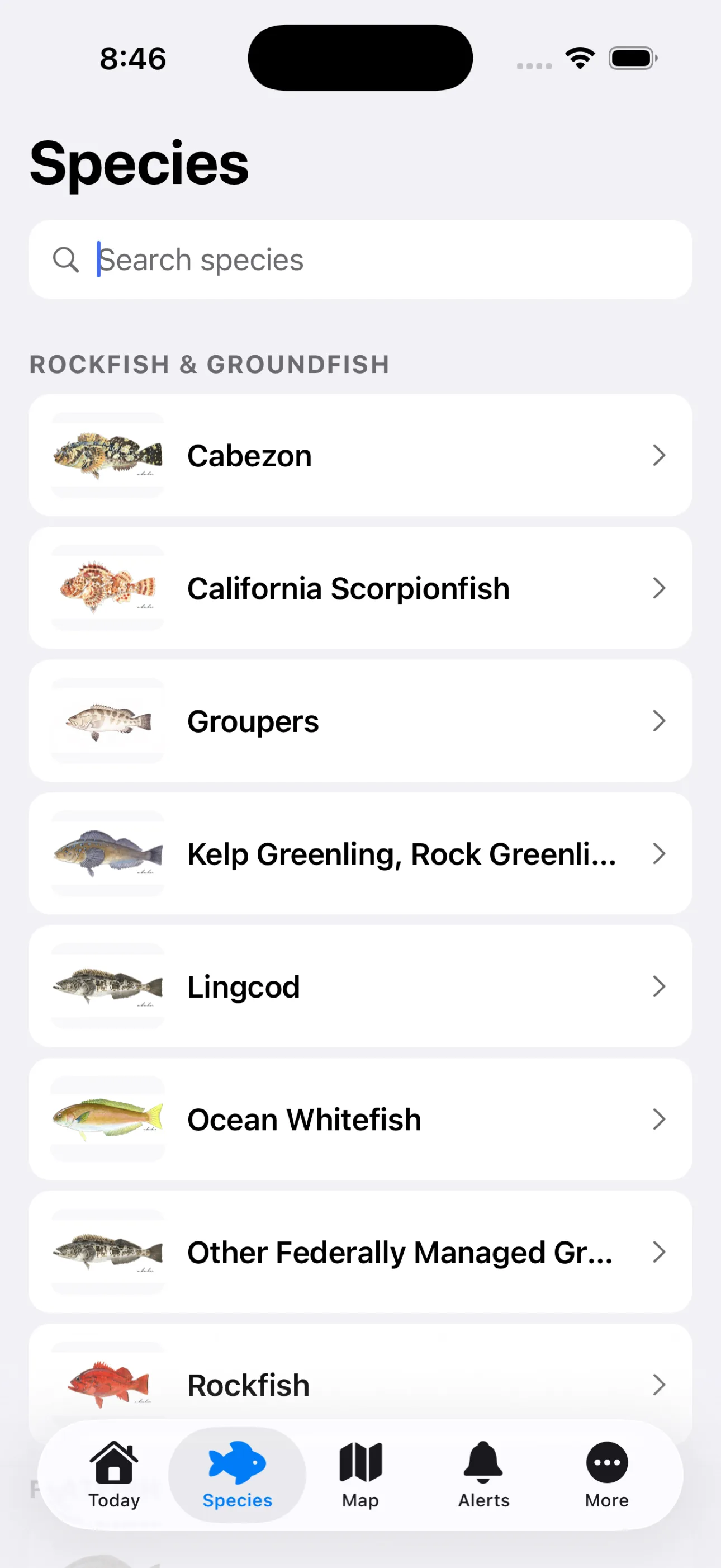
Rockfish, lingcod, halibut, salmon, crab, lobster and dozens more — color-coded so you know instantly what's open in your region.
Tap any species for bag limits, size limits, season dates, gear rules and depth restrictions — plus the MPA lines, the citation cost and the consumption advice before you drop a line.
Seasons, limits, licences and fines answered straight — sourced from CDFW, OEHHA and the Judicial Council, and kept current.
Plain-English summary of the 2026 California ocean sport fishing regulations — seasons, bag limits, size limits, depth restrictions and what changed this year.
Read the guide →How much a California fishing license costs in 2026, where to buy it online, who is exempt, and which validations and report cards ocean anglers actually need.
Read the guide →Reduced-fee California fishing licenses cost $10.04 — who qualifies as a low-income senior, disabled veteran or recovering service member, the lifetime license prices by age, and the age at which a licence stops being free.
Read the guide →Month-by-month calendar of California ocean fishing seasons — the October 2 lobster opener, the October 1 southern rockfish closure, the November 7 Dungeness crab opener, salmon quota dates, the January rockfish shutdown and the March lobster close.
Read the guide →The California spiny lobster season opens at 6:00 p.m. on Friday, October 2, 2026. Opening night rules, the 7-lobster limit, the 3¼-inch carapace measurement, report card deadlines and the mistakes wardens write tickets for.
Read the guide →The recreational Dungeness crab season opens Saturday, November 7, 2026 — the first Saturday in November. The 10-crab limit, the 5¾-inch minimum, trap validation rules, and why domoic acid and whale entanglement delay the opener most years.
Read the guide →When rockfish season opens in California in 2026, how the depth restrictions work, and the 10-fish RCG bag limit with sub-limits for vermilion, copper and quillback.
Read the guide →When California lobster season opens and closes, the 7-lobster bag limit, the 3¼-inch carapace minimum, report card rules and how hoop netting and diving for spiny lobster works.
Read the guide →Recreational Dungeness crab season dates in California, the 10-crab bag limit and 5¾-inch size minimum, plus how domoic acid and whale-entanglement delays work.
Read the guide →The California halibut size limit is 22 inches total length. The bag limit is 5 fish in the Central and Southern regions and 2 in the north on CDFW’s current regional pages. How to measure, and how it differs from Pacific halibut.
Read the guide →California ocean salmon by zone as of September 2026: Monterey and south close September 30, San Francisco runs to October 31, the northern zones are done. Dates, quotas, the 2-fish limit and the 20-inch minimum.
Read the guide →Every California ocean size limit and bag limit in one table — halibut 22", white seabass 28", yellowtail 24", lingcod 22", leopard shark 36", sheephead 12", bass 14", surfperch 10½" — with the regions where each number changes.
Read the guide →A current-status rundown of California ocean fish seasons — rockfish, halibut, salmon, lingcod, crab, lobster and more — and how to check what’s open in your region today.
Read the guide →Second Rod Validation $20.26, Ocean Enhancement $7.30, Crab Trap $2.98, and the report cards for lobster, sturgeon, salmon and steelhead. Which ones your fishing actually requires, and the deadlines that cost money to miss.
Read the guide →You can fish a California public pier without a fishing license. Bag limits, size limits, seasons, the two-rod rule, MPA boundaries and report cards still apply — here is exactly what changes and what does not.
Read the guide →The rules for surf fishing in California — licence and Ocean Enhancement Validation, surfperch limits and the spring closure, the 22-inch halibut minimum, sand crab and mussel collection, MPA lines on the beach, and the consumption advice for surf species.
Read the guide →The rules for spearfishing in California — licence and Ocean Enhancement Validation, which species may be taken by spear and which absolutely may not, the lobster hands-only rule, MPA boundaries and breath-hold versus scuba.
Read the guide →What a California fishing citation actually costs in 2026. Fishing without a license runs $430–$485 in total bail, over-limit adds $71–$82 per fish, and two statutes can cut it down. Read from the Judicial Council bail schedule.
Read the guide →How California’s OEHHA/CDPH fish consumption advisories work, which ocean species carry mercury or PCB guidance, domoic acid closures, and how to check advisories for your fishing spot.
Read the guide →California has 124 Marine Protected Areas — 157 managed areas once special closures and federal reserves are counted — covering about 16% of state waters. What MPAs are, the difference between reserves and conservation areas, and how to know if you can fish where you are.
Read the guide →The 2026 California grunion run season ended August 30. How the predicted-run calendar works, when the 2027 dates land, the hands-only rule, the 30-fish bag limit, the April–June closed season and why nets get people cited.
Read the guide →How to pick a tide window on the California coast — moving water over slack, dawn and dusk, the moon phases that matter for grunion and lobster, and the fishing-hour rules that make some of those windows illegal.
Read the guide →California red abalone season has been closed since 2018 and remains closed in 2026. Why the fishery collapsed, what the law says now, and the outlook for reopening.
Read the guide →How CDFW’s ocean sport fishing regulations work — bag vs possession limits, management regions, in-season changes, fillet rules — and how to keep up without reading a 100-page PDF.
Read the guide →Both 2026 California Free Fishing Days — July 4 and September 5 — have passed; CDFW sets two more each spring for the following year. No licence needed on those days, but bag limits, size limits, seasons, gear rules, report cards and MPA boundaries all still apply.
Read the guide →It depends on the species and your region. As of September 2026: California halibut, white seabass, yellowtail and most nearshore species are open year-round; rockfish and lingcod are open in the north but close or move offshore in the Southern Region on October 1; ocean salmon runs through September 30 south of Pigeon Point and October 31 off San Francisco; spiny lobster reopens October 2; Dungeness crab reopens November 7. Creel shows every species’ live open/closed status for your region, refreshed daily from CDFW. Learn more →
Friday, October 2, 2026 at 6:00 p.m. The recreational spiny lobster season opens at 6 p.m. on the Friday preceding the first Wednesday in October and closes at 11:59:59 p.m. on the first Wednesday after March 15 — March 17, 2027. Bag limit 7, minimum 3¼-inch carapace, and a $12.70 Spiny Lobster Report Card is required. Learn more →
The recreational season opens on the first Saturday in November — Saturday, November 7, 2026. Bag limit 10 crab, 5¾-inch minimum. Domoic acid testing and whale-entanglement risk can delay the opener in individual zones with only days of notice, which is exactly the kind of change Creel pushes to your phone. Learn more →
A resident sport fishing license costs $64.54 in 2026 and is valid 365 days from purchase. Short-term options: one-day $21.09, two-day $32.40, ten-day non-resident $64.54. Anglers 15 and under don’t need one, and an Ocean Enhancement Validation ($7.30) is required south of Point Arguello. Learn more →
Total bail for fishing without a license runs about $430 to $485 depending on the county — the base fine is small, the assessments stacked on top are not. Bring proof of a valid license to court and the same charge drops to roughly $176 to $192. Creel carries all 120 offences from the Judicial Council schedule, per species. Learn more →
No. On a public pier in ocean waters you can fish without a license — but every other rule still applies: bag limits, size limits, seasons, the two-rod limit, finfish that may not be taken, and the ban on taking undersize fish. Piers inside MPAs have their own rules. Learn more →
Rockfish is closed statewide January 1 through March 31 and opens April 1. From there it splits by area: the Northern, Mendocino, San Francisco and Central management areas stay open all depths through December 31, while the Southern Region moves to a 50-fathom inshore limit on July 1 and closes entirely on October 1. The bag limit is 10 in combination across the RCG complex, with sub-limits. Learn more →
California halibut must measure at least 22 inches total length, and the season is open year-round. The daily bag limit is 5 fish in the Central and Southern regions and 2 fish in the Northern, Mendocino, San Francisco and San Francisco Bay regions. Learn more →
Often, but not always, and CDFW does not answer this question at all. OEHHA publishes separate consumption advice by species and water body — four rockfish species are DO NOT EAT for women 18–49 and children in California coastal waters, and lingcod is one serving a week. Creel carries all 322 OEHHA guidelines next to the bag limit. Learn more →
It depends on the type: State Marine Reserves ban all take, while some State Marine Conservation Areas allow limited fishing. California has 157 MPAs and special closures covering roughly 16% of state waters — you need to know which one you’re in. Learn more →
Yes. All regulations, seasons, limits, penalties, advisories, sun and moon times are cached on your phone, so everything keeps working with zero signal out on the water. Data refreshes automatically whenever you’re back online.
No. Creel is an independent app. Regulations are reproduced daily from official CDFW, CDPH and OEHHA sources with clear attribution, and may not reflect last-minute emergency orders — always confirm with CDFW before fishing.
Current CDFW regulations for every species in every California region — in your pocket, even with no signal. Try Creel free for 3 days.
 Creel
Creel